



S1PR2 Agonist
-
Siponimod
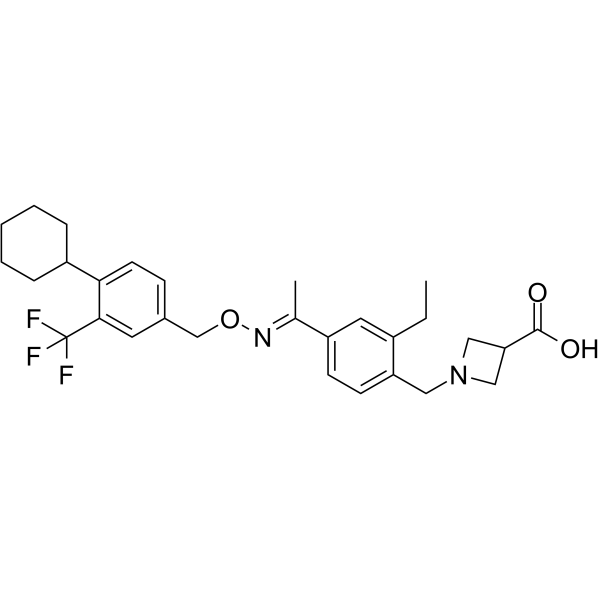 0 ImagesSynonyms: BAF-312
Siponimod (BAF-312) is an orally active, blood-brain barrier penetrant dual agonist of S1P1/S1P5, with EC50 values of 0.39 nM and 0.98 nM, respectively. Siponimod induces S1P1 internalization, activates GIRK channels, inhibits lymphocyte egress, reduces peripheral lymphocyte counts, triggers transient bradycardia, prevents synaptic neurodegeneration, promotes remyelination, alleviates demyelination, and prevents the loss of GABAergic interneurons. Siponimod can be used in research related to multiple sclerosis.
-
CYM-5478
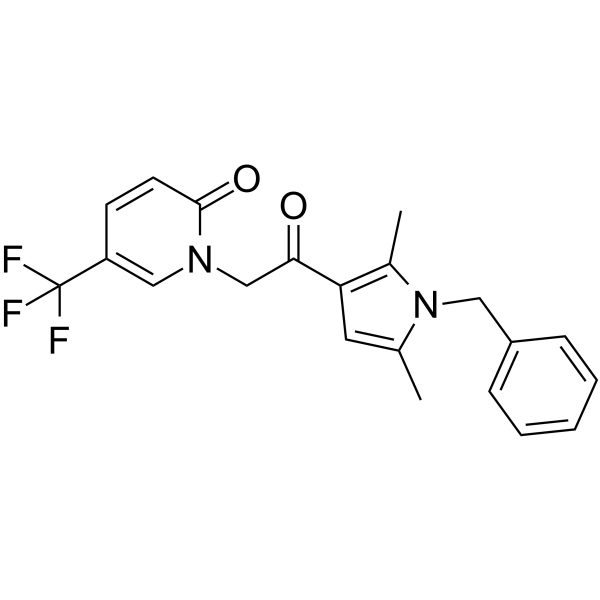 0 Images
CYM-5478 is a potent and highly selective S1P2 agonist with an EC50 of 119 nM in a TGFα-shedding assay. CYM-5478 protects neural-derived cell lines against Cisplatin toxicity.
-
Siponimod hemifumarate
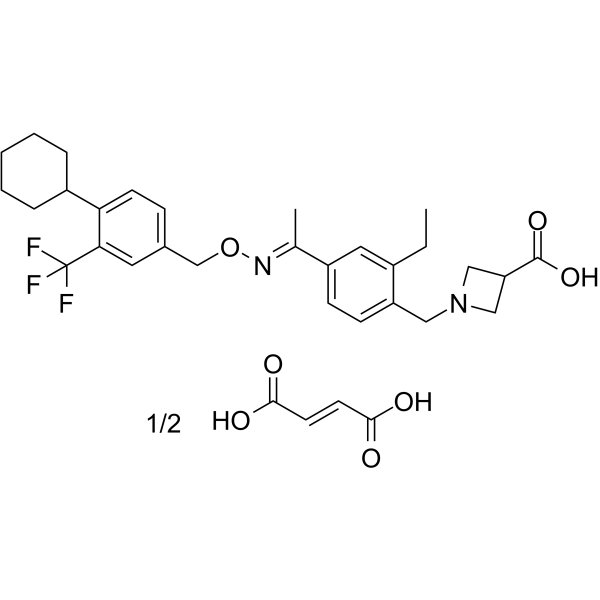 0 ImagesSynonyms: BAF-312 hemifumarate
Siponimod (BAF-312) hemifumarate is an orally active, blood-brain barrier penetrant dual agonist of S1P1/S1P5, with EC50 values of 0.39 nM and 0.98 nM, respectively. Siponimod hemifumarate induces S1P1 internalization, activates GIRK channels, inhibits lymphocyte egress, reduces peripheral lymphocyte counts, triggers transient bradycardia, prevents synaptic neurodegeneration, promotes remyelination, alleviates demyelination, and prevents the loss of GABAergic interneurons. Siponimod hemifumarate can be used in research related to multiple sclerosis.
-
L-threo Lysosphingomyelin (d18:1)
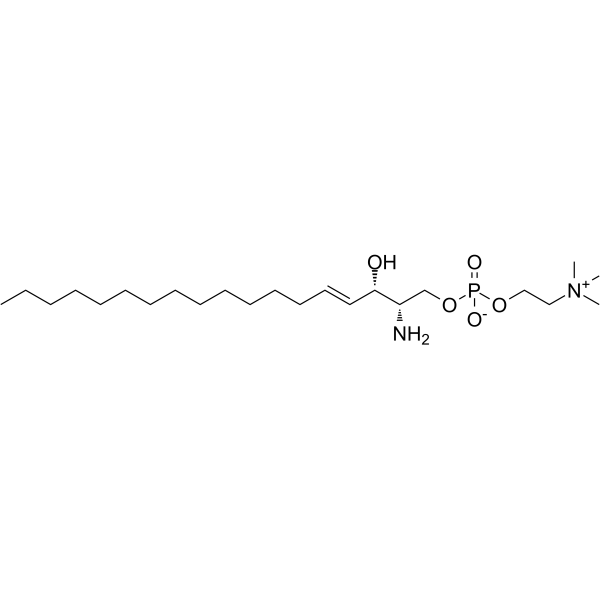 0 ImagesSynonyms: L-threo-Sphingosylphosphorylcholine
L-threo Lysosphingomyelin (d18:1) (L-threo-Sphingosylphosphorylcholine) is an endogenous bioactive sphingolipid. L-threo Lysosphingomyelin (d18:1) is a potent S1P receptor agonist with EC50s of 19.3, 131.8, and 313.3 nM for hS1P1, hS1P3, and hS1P2, respectively.




